


2026/02/13
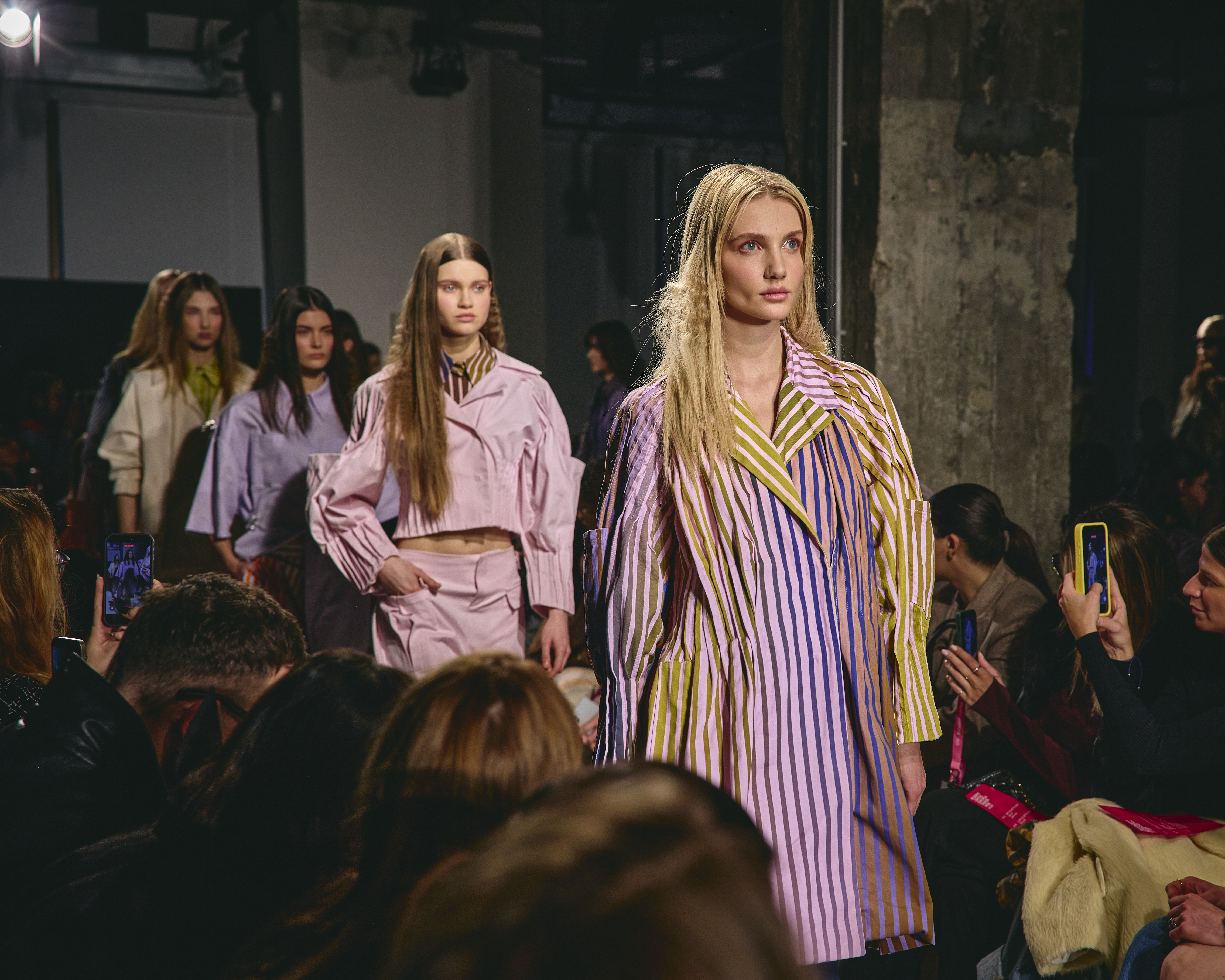
It is now tradition that the first catwalk shows of Budapest Central European Fashion Week (BCEFW) are held in Apollo Gallery’s industrial exhibition space. The Friday programme of the 17th season kicked off at one of the most popular contemporary fine arts galleries of the capital – the newest collections by regional and Hungarian young designers were unveiled among monumental works by painter József Gaál.
The opening day of the 17th season of BCEFW came to life in Apollo Gallery; the contemporary fine art exhibition space became home to the latest creations by emerging domestic and regional designers for a day. The runway was framed by pieces from the exhibition What We Preserve, What We Pass On, including József Gaál’s monumental pink painting, which resonated elegantly with this season’s BCEFW colour. As in the past two fashion weeks, this year the models once again appeared from behind panels covered in a print of the artwork.
As the evening’s opening act, Czech designers presented their collections: within the framework of the CFC Collective Show, Vanami unveiled its new menswear collection, exploring the relationship between contemporary feminism and male allyship through layered pieces crafted from deadstock and natural materials, enriched with striking printed surfaces and fine-knit textures. This was followed by Lenie Hanz’s Falling Clothes 2.0 collection, which explored the notion of the garment as an autonomous, sculptural object, expressed through dark tones and abstract contours.
The Czech designers were followed by the Slovenian LJFW Collective Show, with three young creators’ collections in the spotlight. The series Cyclicality of Clothing by Pia Šilec (PIAS Label) reimagined classic pieces of clothing (including shirts and transitional coats) through structured striping and soft pastel tones, with cuts designed to respond to the body’s changes. Medle reinterpreted the clothing energy of the eighties with extravagant material combinations, dramatic prints of her own design, and feminine silhouettes. Martin Kaluža’s Apocalyptic Afterparty collection painted a vision of a post-apocalyptic, desert world infused with the aesthetics of the techno subculture: futuristic exoskeleton-like 3D jewellery and softly cascading textures.
The next event of the day was the SFC Collective Show, presenting Slovakian designers. Michaela Stanová’s Soft Power collection explored the motif of the shield through a feminist perspective, responding to the paradox of vulnerability with knitted fabrics combined with metal threads and chains. Silvia Berecká’s Spore-gasm collection reflected on the aesthetics and queer symbolism of mushrooms with textured, hand-knitted and embroidered pieces. The brand TO BE US (Tobias Rúčka’s project) recreated the characteristic garments of the ‘70s and the ‘80s from Burda archives, with a hint of punk details.
The brand-new series of leCRI opened the collective Ukrainian show, which evoked the mystical world of the ama divers through pieces crafted from recycled materials and informed by Japanese fabric manipulation techniques. The works by Solomiia Hrynkiv are centred on hidden emotions and human vulnerability, with a collection based on the movements of the body and the behaviour of textures to bring hidden inner states to the surface.
A novelty in the 17th season, the New Generation Individual Show gave two young designers the opportunity to present their fresh, yet well-developed works in individual shows. CHOKASSY’s series titled Measures of a Woman draws on the dialogue between cultural heritage and modern femininity with the brand’s distinctive, contemporary shapes and traditional artisanal techniques. The collection of Valentin Szarvas explored the philosophy of silence, taking shape in moderate silhouettes, layered textures, and spatial compositions.
To close the evening, the youngest generation of designers debuted in the New Generation Collective Show category. SOPHIARON’s Stubble and Fringes clothing line sought to reinterpret rural heritage through the use of natural materials, raw textures, and free-flowing silhouettes. The Corpvs Doloris collection by DAN! ELLE translated the pain of body and soul, along with emotions associated with cancer, into anatomically inspired silhouettes. Noémi Szalkay concluded the evening with the collection Once Upon a Time, bringing to life the romance of the age of chivalry and the world of our inner child.