


2025/04/02
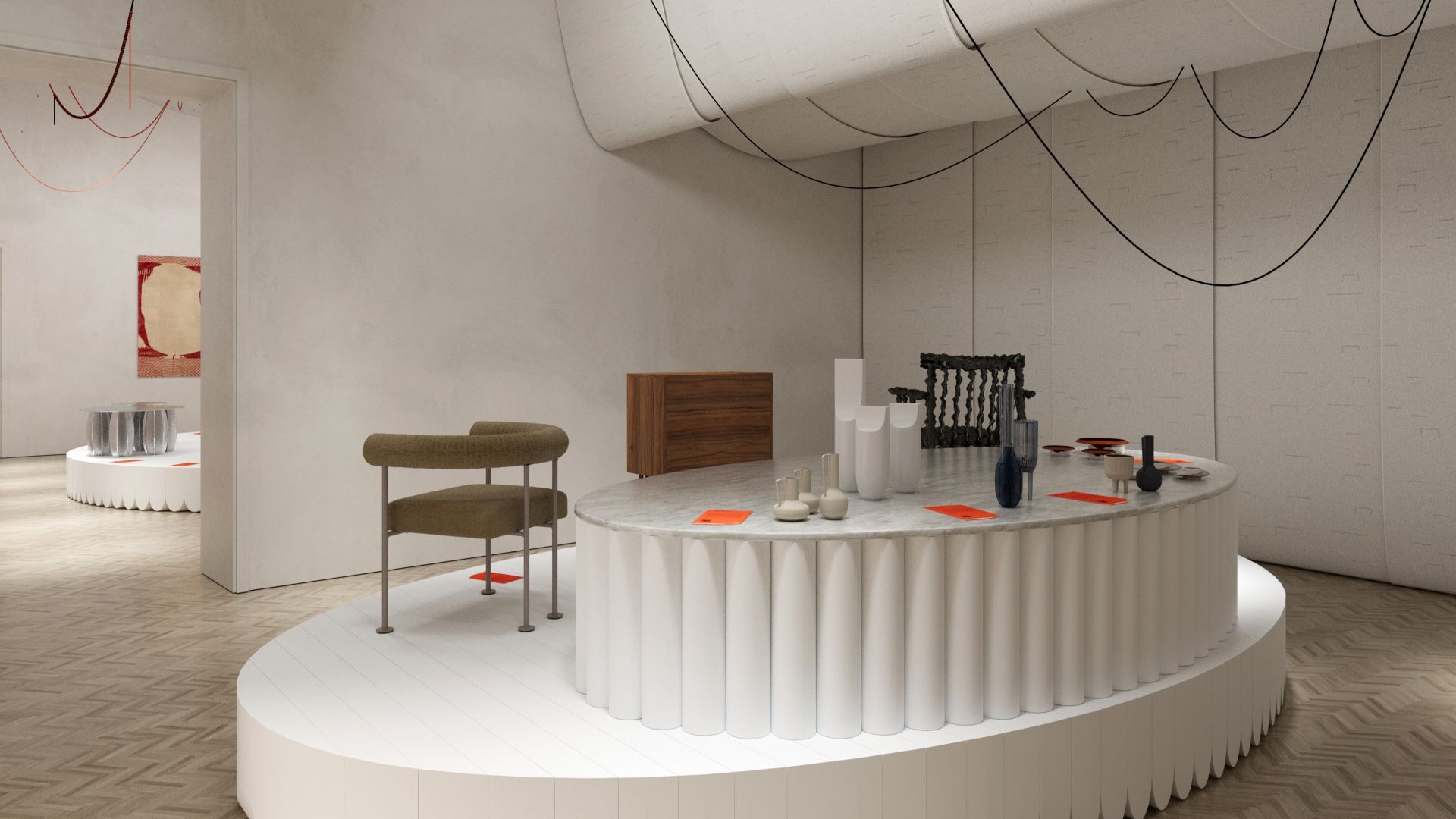
The Hungarian Fashion & Design Agency (HFDA) presents works by 24 Hungarian designers under the Budapest Select umbrella brand at this year’s Milan Design Week, providing an international platform for contemporary domestic design. The exhibition’s installation is the result of a design competition announced by the HFDA, to which seven architecture studios submitted their concepts. Of the three finalists – Noumen Studio, Vikár and Lukács Architecture Studio, and URBA Architectural Studio – URBA’s design was selected for implementation, under the curatorial direction of Angéla Góg and with the professional contribution of Barna Erdész.
For the first time, the Hungarian Fashion & Design Agency announced an open call for proposals for the visual concept and spatial design for Hungary’s presence at the 2025 Milan Design Week, aiming to ensure that the values of the Hungarian creative industry are authentically represented at the world’s most prestigious design event. The call created an opportunity for Hungarian creative industry players to reflect, from an external perspective, on what sets Hungarian design apart amidst the bustle of the international showcase.
The call attracted significant professional interest, and the submissions were evaluated by a three-member expert jury: Ákos Dániel Bara, architect; Attila Ledényi, founder of Art Market Budapest; and Judit Osvárt, editor-in-chief of ELLE Decoration. Based on their feedback, each submission was of high quality. The three finalists were selected in accordance with the exhibition’s objectives, the application requirements, and the evaluation criteria — originality, sustainability, and innovation.
In addition, the entries needed to reflect on the theme of this year’s edition of Milan Design Week, ‘Connected Worlds’, which explores the potential connections between human-made systems and those powered by artificial intelligence, highlighting the connecting role of design. In implementing the winning concept, the design studio was tasked with creating a spatial design for the exhibition space, responding architecturally to the unique characteristics of the venue. The curator shaped the conceptual framework of the exhibition, responsible for deepening the content layers and selecting the objects for the display.
Three of the submitted concepts – by Noumen Studio, the designers from Vikár and Lukács, and URBA – were selected for the detailed development of the site-specific installation.
The finalist Vikár and Lukács Studio is an advocate of site-specific design, approaching every project with modern and functional solutions that fit the given context. The installation, Transparent Dimensions, created by the designers and curator Barna Erdész, was built on the triad of innovation, technology, and tradition. It aimed to explore the meeting point of artificial intelligence and traditional object-making. The concept addressed a key contemporary issue: AI does not replace the creator but rather opens up new possibilities for them. The installation was closely connected to the discourse of environmental aesthetics and shaping a sustainable future, placing the relationship between humans, technology, and nature at the centre. The three enclosed rooms and the interconnected courtyards were visually and thematically intertwined. The AI-generated tapestries were complemented by programmed lights and meditative sounds, creating a complex sensory experience. The use of light played a prominent role in the concept. The constantly changing spatial experience – created by the dynamic contrast between bright spotlights and softly diffused lighting, along with the screens covered in iridescent foil – encouraged continuous movement among the visitors.
Noumen Studio’s concept, Óperencia, was based on the tripartite worldview of Hungarian folk tales, also referencing the theories of disenchantment by Max Weber and Silvia Federici. The designers proposed an approach that re-evaluates the role of traditional knowledge and communal rituals, placing creativity and deeper layers of human connection at the forefront. The three distinct spaces – Underworld, Earthly World, and Afterlife – offered different sensory planes, and the exhibition’s objects, including ceramics, local textiles, and inlaid furniture, carried both aesthetic and ritualistic significance. The installation, built on the use of natural materials and playful, organic forms, was completed with grandiose flower lamps and delicate light effects. The founders of Noumen Studio, Ákos Orbán and Balázs Hudy, draw on their different professional backgrounds and doctoral research to create spatial worlds where emotion, sustainability, and innovation exist in synergy.
Finally, the concept by URBA Architecture Firm and curator Angéla Góg was selected for implementation, with additional input from Barna Erdész, curator of Vikár and Lukács. URBA is an architectural and interior design studio with offices in Budapest and Vienna, focusing on an ethical approach, carefully chosen materials, and contemporary, minimalist spatial organisation. They frequently collaborate with various independent creators. While Angéla Góg, as a designer and researcher, explores the narrative role of materials, forms, and experiences, with a particular focus on the relationship between design and sensory perception, Barna Erdész has extensive experience in product design, and as the director of a contemporary gallery, he is particularly dedicated to showcasing collectible design and emerging artists.
URBA’s design stood out in the jury's evaluation because, in addition to meeting the competition criteria, it harmoniously aligned with the structure of industrial and fine art exhibitions and effectively applied the principles of object presentation. The concept titled VVoven View places the focus on the intertwining of tradition and innovation, while simultaneously highlighting and supporting the work of the twenty-four Hungarian designers selected by the jury. The key element of URBA’s concept is the system of floating paper sheets covering the ceiling, which are filled with content through AI-based conversations with the designers. The narrative network that emerges from this defines the spirit of the exhibition. Referring to woven structures and points of connection, the term ‘vvoven’ in the exhibition’s title emphasises the interweaving of various creative perspectives and design processes. The exhibition is structured across three thematic spaces: the first explores the themes of tradition and sustainability, the second focuses on technological innovations, and the third showcases the experimental outcomes of the meeting between tradition and artificial intelligence. The architectural concept of the exhibition demonstrates strong sustainability efforts: the floating paper sheets and the EPS furniture supporting the exhibition elements are made from recycled or recyclable materials – at the end of the exhibition, every element can be shredded and reused for other architectural purposes. This approach is not only an aesthetic statement but also a commitment to sustainability: the space not only conveys ideas but also sets an example for the possibilities of future-friendly design.
 © Creative Hungary. 2026. Minden jog fenntartva.